Product name and definition
What is welded steel grating?
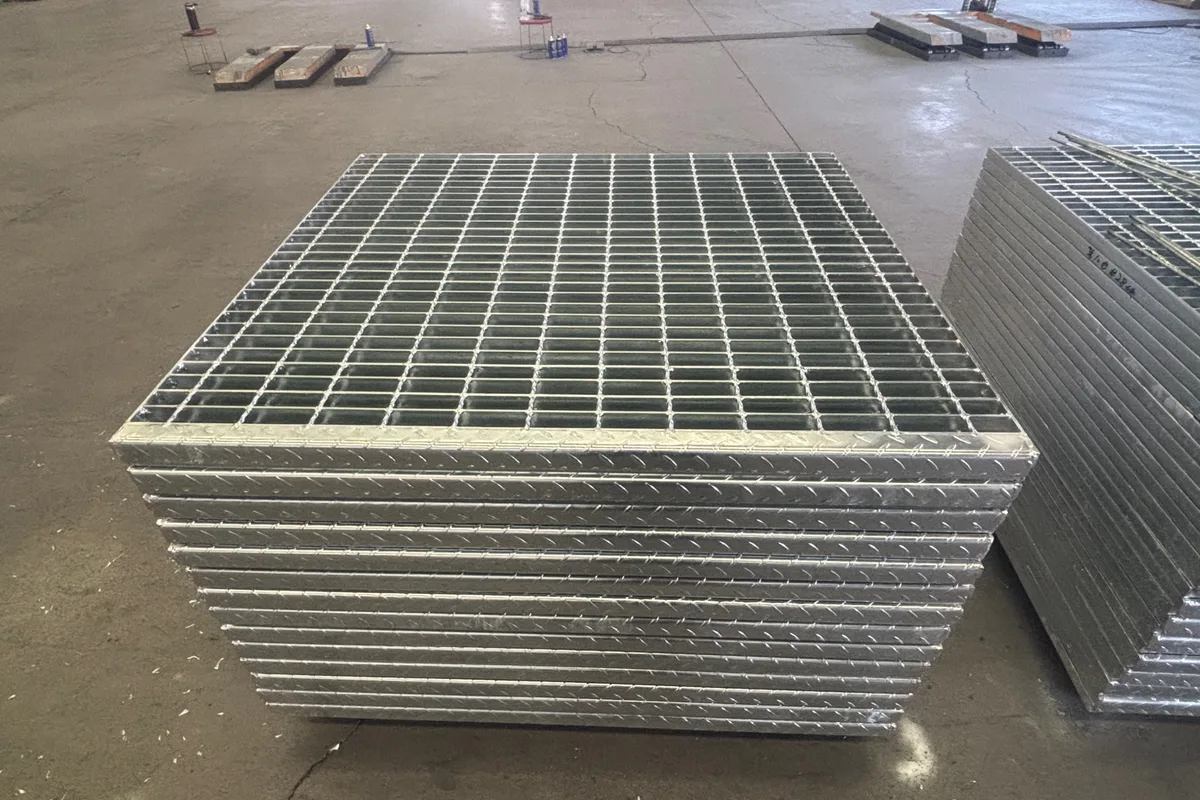
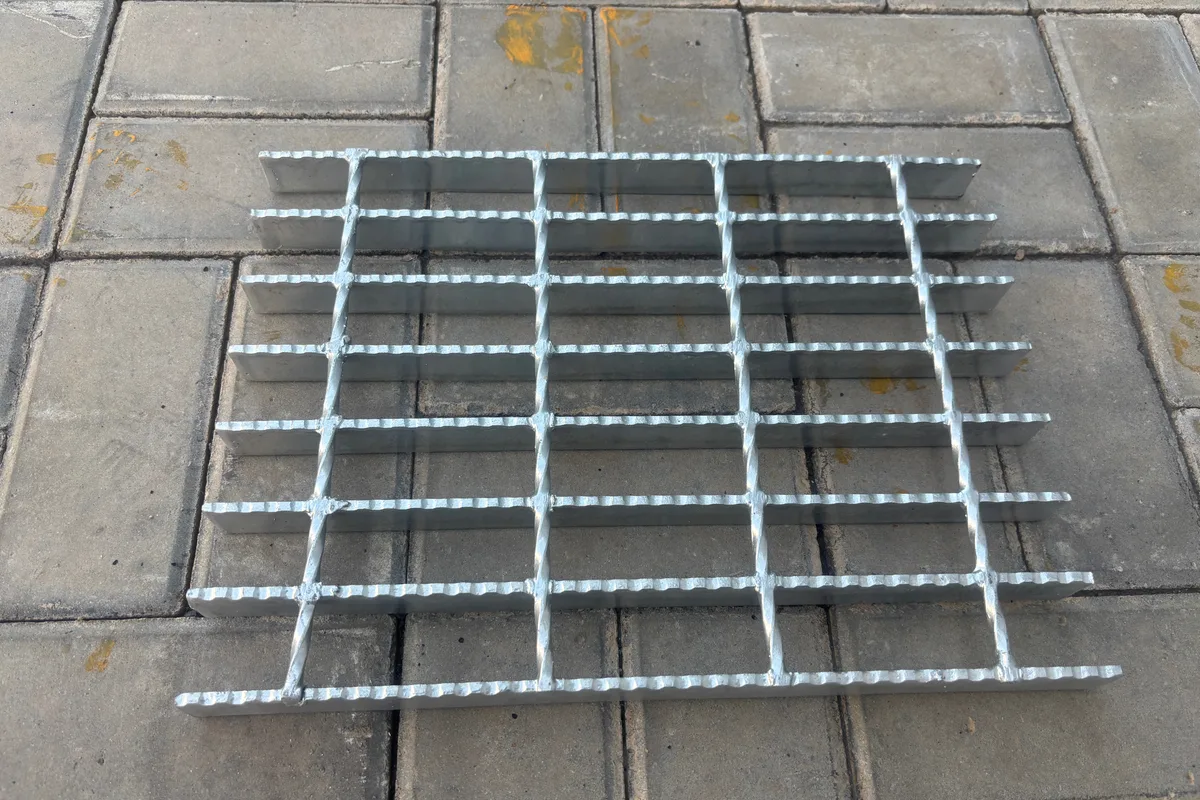
Welded steel grating is also called forge-welded grating or welded bar grating. The name refers to the way the panel is built: flat steel bearing bars are held at set centres, twisted or round cross bars are placed across them, and every intersection is fused by resistance welding under hydraulic pressure.
This creates a metallurgical bond without filler wire, so the joint becomes part of the parent material. The result is a rigid, open grid that transfers a point load to neighbouring bearing bars and then to the supports.
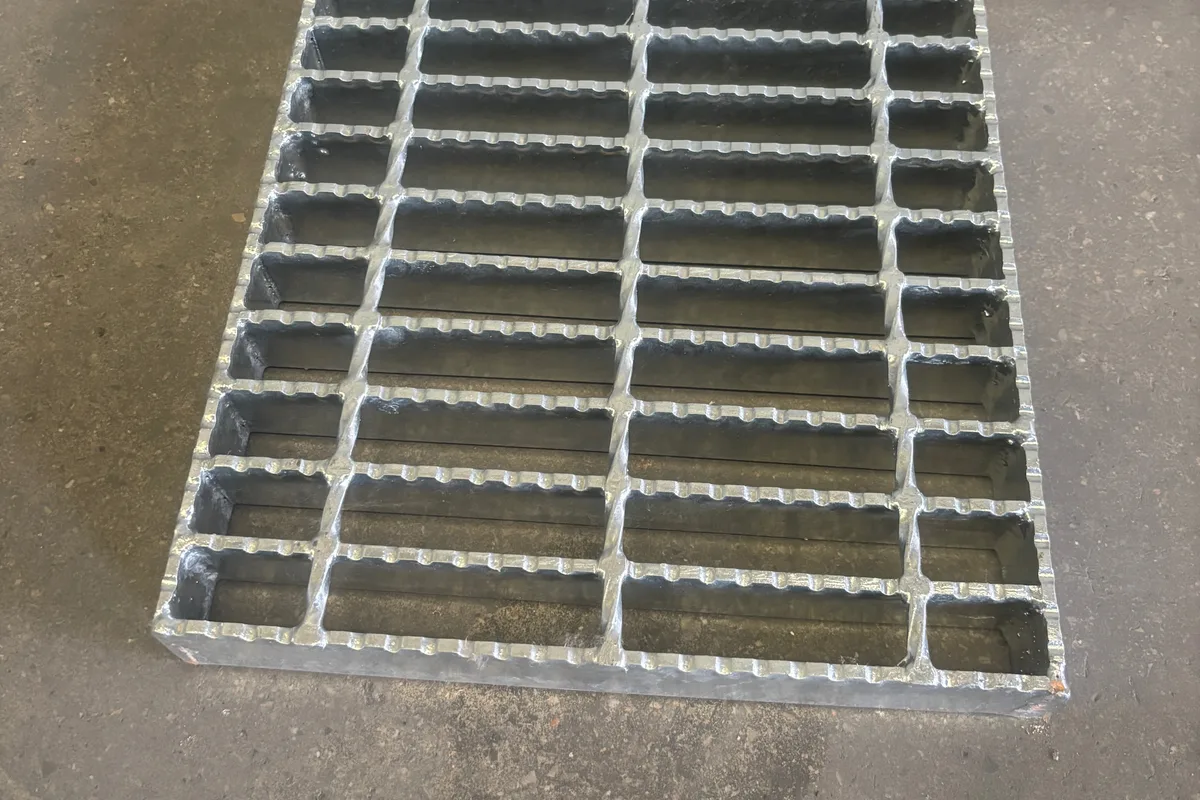
Because the process does not notch or punch the bearing bars, the full cross-section carries the load. Twisted cross bars also add grip underfoot. For steeper or wetter conditions, serrated bearing bars can be used.
Structure and how it works
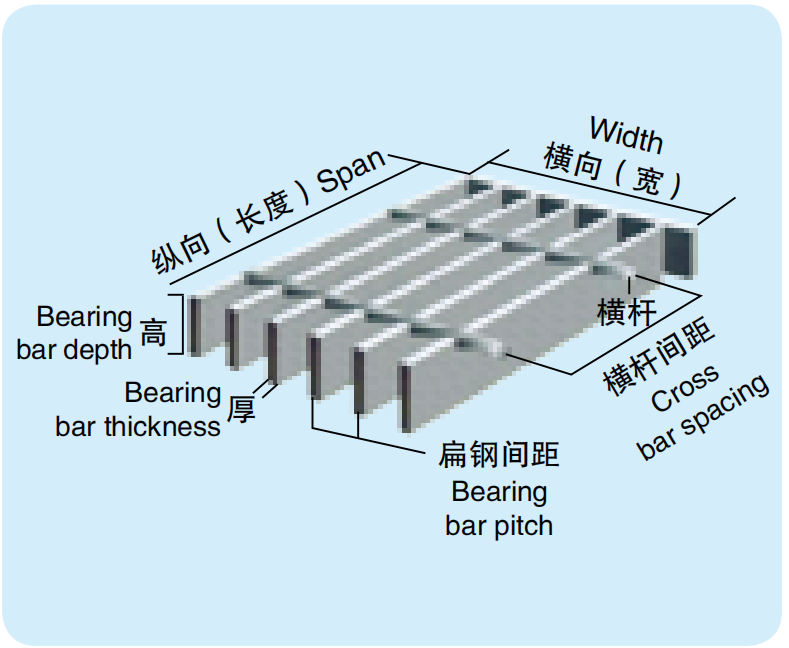
- Bearing bars are the flat steel strips that carry the load. Their depth, thickness and spacing control the load capacity and deflection of the panel.
- Cross bars keep the bearing bars in position and help distribute loads sideways. They are usually twisted square steel set at 50 mm or 100 mm centres.
- End plates or banding are flat bars welded across the ends of the bearing bars. They stiffen the panel, protect the cut edges and give a neat finish.
- Frames and cut-outs are added to trench covers and platform panels to match the opening, support detail or penetration layout.
Manufacturing process
Each welded steel grating panel follows a controlled sequence. The exact parameters depend on the bar size, pitch and order quantity, but the general flow is the same.
Material preparation
Bearing bars and cross bars are straightened, cut to length and cleaned of oil, rust and scale.
Bar layout
Bearing bars are placed at the specified pitch. Cross bars are positioned across them at right angles.
Resistance welding
High current and pressure are applied at every intersection, fusing the bars into a permanent metallurgical bond.
Trimming and banding
The panel is cut to size and the edges are banded or fitted with end plates as required.
Surface treatment
Carbon steel panels are usually hot-dip galvanized after fabrication. Stainless steel panels are pickled and passivated.
Inspection and packing
Dimensions, weld appearance, coating coverage and flatness are checked before bundling.
Common sizes and options
The following choices are common in industrial orders. Final capacity must always be checked against the actual span, load and support conditions.
| Option | Common choices | What to consider |
|---|---|---|
| Bearing-bar size | 20×3 mm to 60×5 mm; heavier bars for vehicle loads | Load, span and allowable deflection |
| Bearing-bar pitch | 30 mm, 40 mm, 60 mm; 15 mm and 20 mm for fine openings | Opening size, drainage and ball-proof requirements |
| Cross-bar pitch | 50 mm or 100 mm | Fabrication layout and panel stiffness |
| Surface | Plain or serrated | Slip risk, slope and contamination |
| Finish | Hot-dip galvanized, painted or untreated | Environment, inspection basis and maintenance |
Surface and finish
Hot-dip galvanizing is the most common finish for welded steel grating. It is applied after the panel is fully fabricated, so the zinc reaches the cut edges, weld points and internal gaps. This gives sacrificial protection even if the surface is scratched or abraded.
Paint or powder coating is used where colour matching or additional chemical resistance is needed. Stainless steel is chosen for aggressive environments, but it is a different material system and should not be confused with coated carbon steel.
Applications
- Industrial platforms, mezzanines and equipment access floors
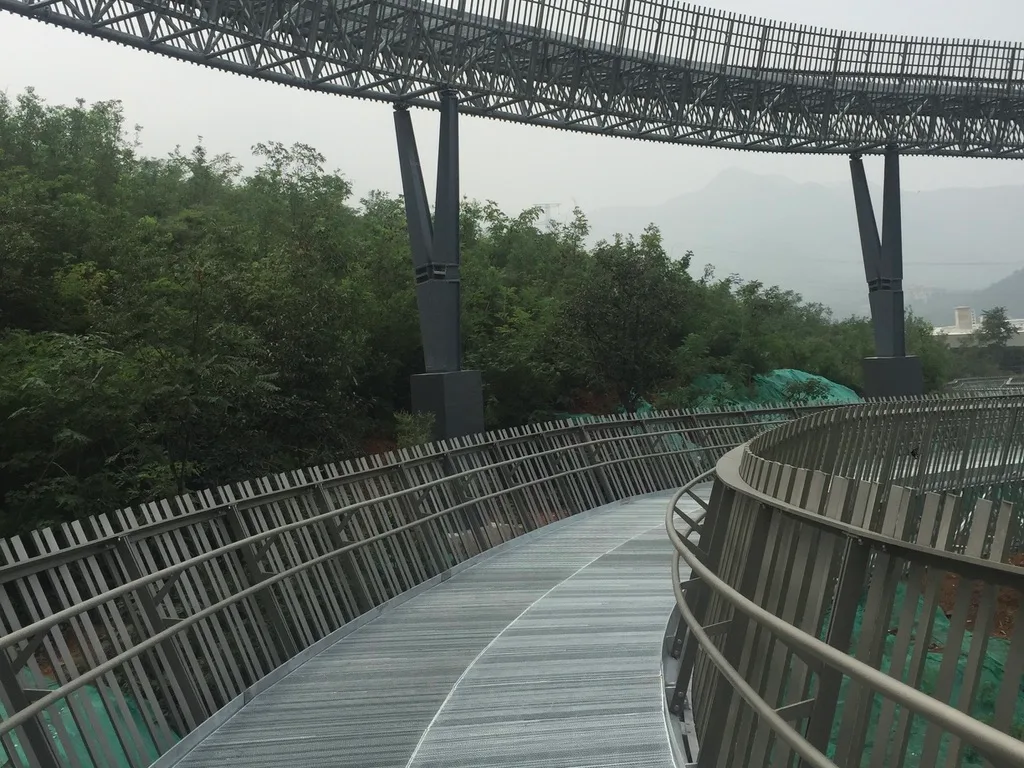
- Walkways, catwalks and maintenance routes
- Trench and drainage covers
- Stair treads with bolted or welded fixing
- Power plants, refineries, steel mills and wastewater facilities
Welded vs press-locked grating
Both are steel bar gratings, but the connection method changes the performance. Choose based on load, not appearance alone.
| Feature | Welded steel grating | Press-locked steel grating |
|---|---|---|
| Joint | Fused by resistance welding under pressure | Mechanically locked by pressing cross bars into slots |
| Strength | Higher; joints are part of the parent material | Lower; relies on mechanical interference |
| Best for | Heavy loads, long spans, industrial traffic | Light-to-medium loads, architectural or clean areas |
| Surface | Twisted cross bars give natural grip | Smooth top surface unless serrated bars are specified |
Usage and installation cautions
- Panels must be supported along the bearing bars, not the cross bars, so the load reaches the primary members.
- Cut-outs and field cuts expose bare steel at the edges. Touch up with a zinc-rich paint if the panel is galvanized.
- Allow for the added thickness of galvanizing when fitting frames, clips and removable covers.
- Do not use welded steel grating for wheel loads without confirming bar size, spacing, span and support detail.
- Drainage and debris passage depend on the opening size; match the pitch to the expected contaminants.
Ordering information
Send a drawing or a clear specification with the following details for an accurate quotation.
- Panel dimensions and clear span between supports
- Bearing-bar size, pitch and surface type
- Cross-bar pitch and finish
- Edge banding, frames, cut-outs and fixing details
- Traffic type: pedestrian, forklift, vehicle or static equipment
- Quantity, delivery destination and required delivery date
Welded Steel Grating FAQ
Is welded steel grating the same as forged grating?
Yes. "Forge-welded" or "resistance welded" describe the same process: heat and pressure fuse the bars without filler material.
Can welded steel grating be used for vehicle traffic?
Heavy-duty welded grating can support vehicles, but the bar size, spacing, span and support detail must be checked for the actual wheel load.
Why is galvanizing done after fabrication?
After-fabrication galvanizing coats the cut edges and welds, which would remain unprotected if the coating were applied to raw sheet or bar first.