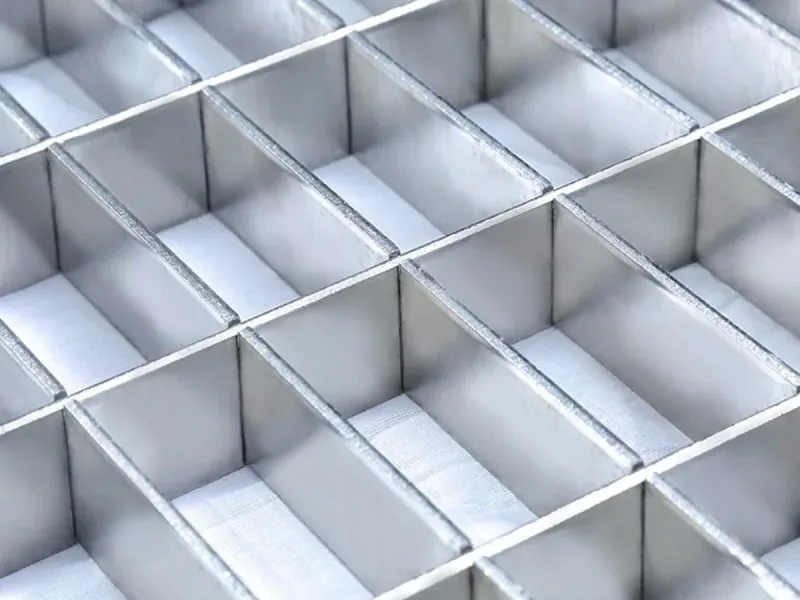
What is press-locked steel grating?
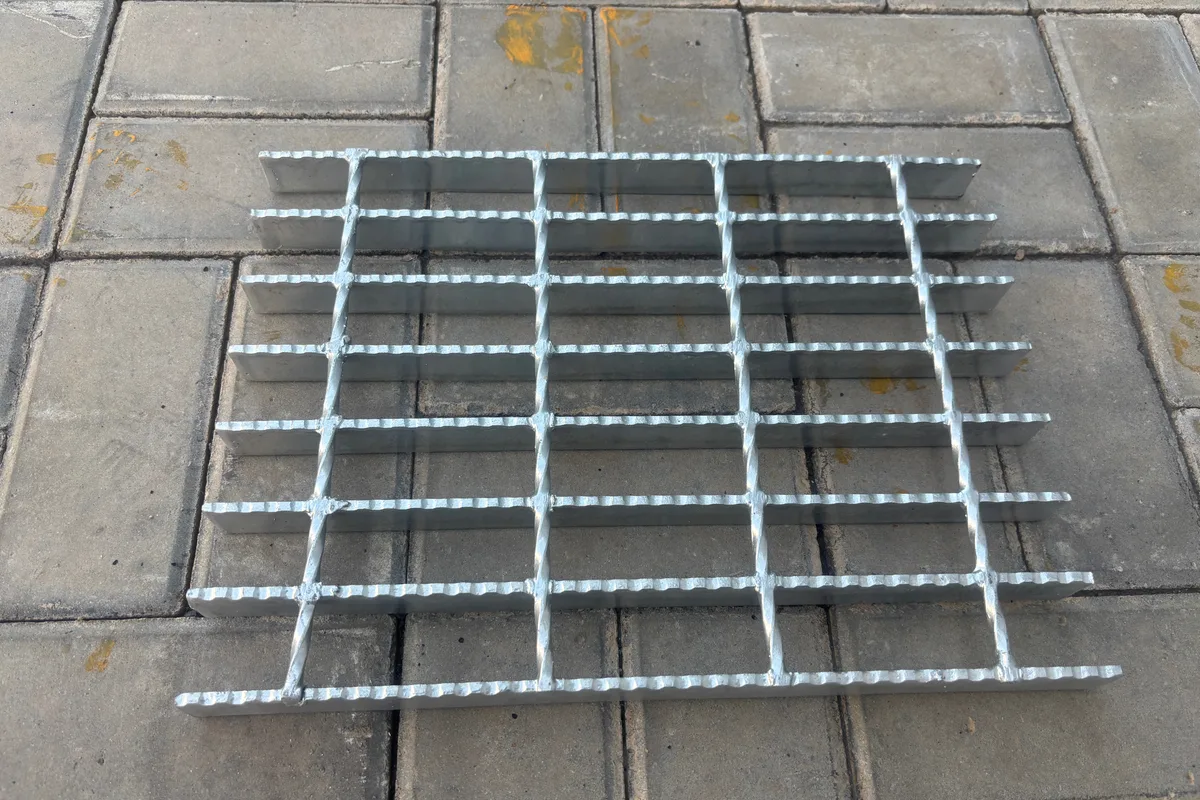
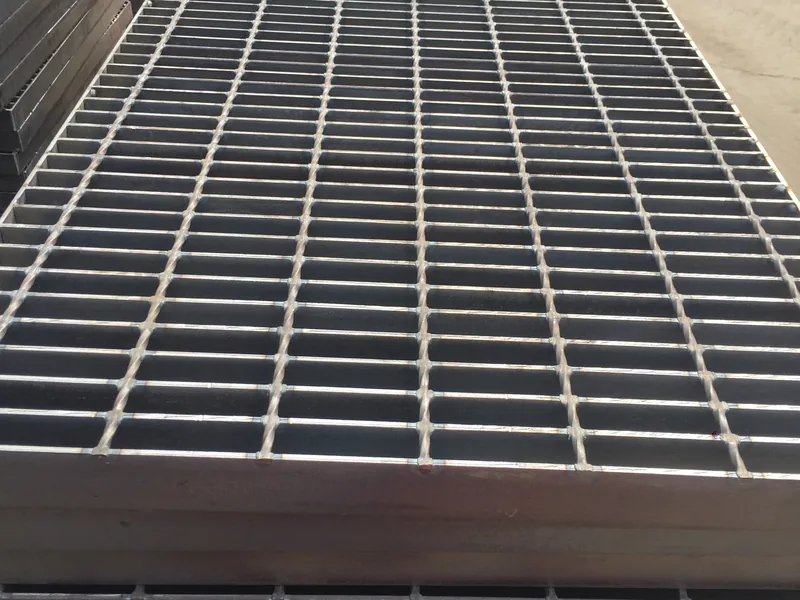
Press-locked steel grating is also called pressure-locked grating or swaged grating. The name refers to how the panel is built: instead of welding, the cross bars are pressed into slots cut near the top of the bearing bars until the metal deforms and locks them in place.
Because there is no weld bead, the top surface is smooth and even. This makes it the preferred choice where appearance matters—facades, screens and clean indoor areas—while still carrying light-to-medium loads.
Structure and how it works
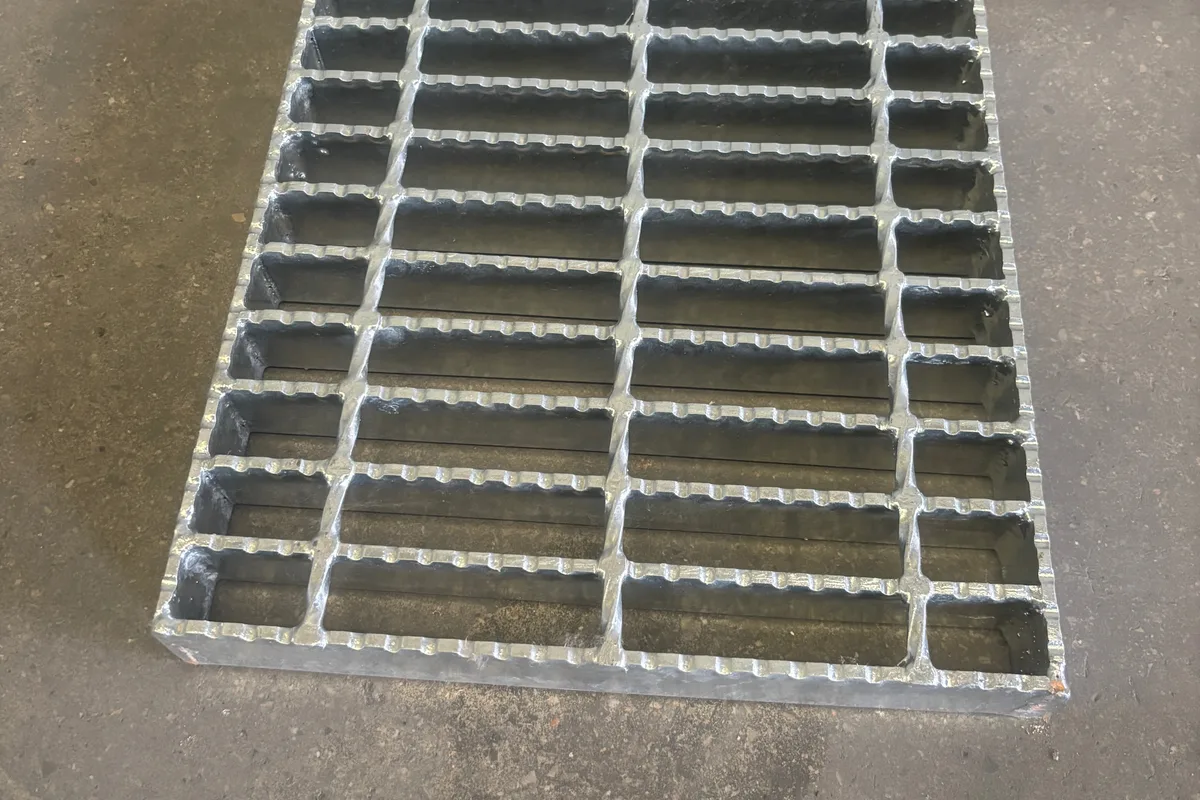
- Bearing bars carry the load. They are slotted near the top edge so the cross bars can sit flush with the surface.
- Cross bars sit in the bearing-bar slots and are swaged under pressure, locking mechanically without filler material.
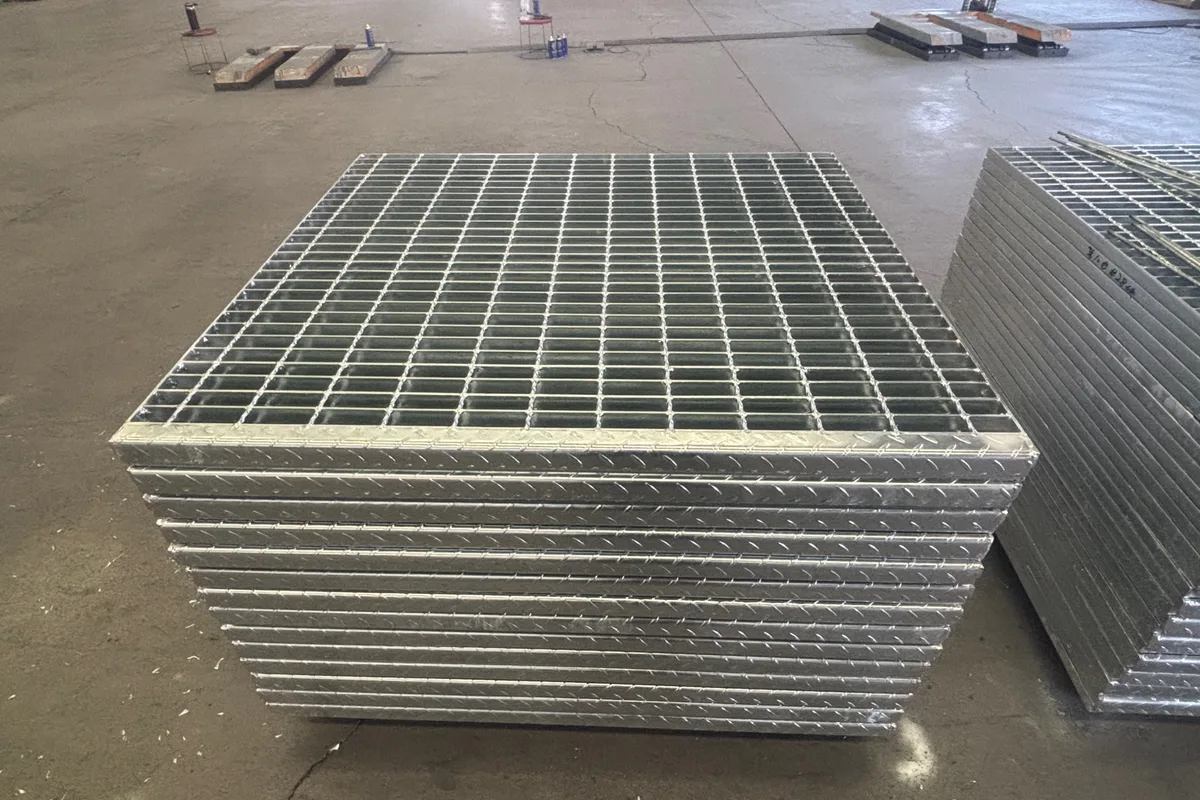
- End plates or banding stiffen the panel, protect the cut edges and give a neat finish.
- Frames and cut-outs are added to covers and platforms to match the opening, support detail or penetration layout.
Manufacturing process
Material preparation
Bearing bars are cut and slotted; cross bars are cut to length and cleaned.
Bar layout
Bearing bars are set at the specified pitch with slots aligned for the cross bars.
Slotting
Notches are cut into the bearing bars at each cross-bar position to receive the bars.
Press-locking
Cross bars are pressed into the slots under high pressure, deforming the metal to form a mechanical lock.
Trimming and banding
The panel is cut to size and the edges are banded or fitted with end plates.
Surface and packing
Carbon steel panels are hot-dip galvanized after fabrication, then inspected and bundled.
Common sizes and options
| Option | Common choices | What to consider |
|---|---|---|
| Bearing-bar size | 20×3 mm to 50×5 mm | Load, span and allowable deflection |
| Bearing-bar pitch | 30 mm, 40 mm, 60 mm | Opening size and drainage |
| Cross-bar pitch | 50 mm or 100 mm | Panel stiffness and fabrication layout |
| Surface | Plain or serrated | Slip risk and appearance |
| Finish | Hot-dip galvanized or painted | Environment and maintenance |
Surface and finish
Hot-dip galvanizing is the usual finish. Like other fabricated grating, it is applied after the panel is complete so the zinc reaches the cut edges and slots. Paint or powder coating is used where colour matching is needed.
Applications
- Architectural facades, sunscreens and decorative screens
- Walkways and platforms in dry, clean indoor areas
- Ventilation and ceiling grids
- Light-duty trench covers and stair treads
Press-locked vs welded grating
| Feature | Press-locked | Welded |
|---|---|---|
| Joint | Mechanically swaged, no weld | Resistance welded under pressure |
| Surface | Smooth, clean top | Twisted cross bars give natural grip |
| Strength | Lower; relies on mechanical interference | Higher; joint is part of parent material |
| Best for | Architectural, light-to-medium loads | Heavy industrial traffic and long spans |
Usage and installation cautions
- Do not use press-locked grating for heavy vehicle or forklift loads; the mechanical lock is weaker than a weld.
- Specify serrated bearing bars where slip is a concern, since the standard top is smooth.
- Allow for the added thickness of galvanizing when fitting frames, clips and covers.
- Support the panel along the bearing bars, not the cross bars, so load reaches the primary members.
- Touch up field cuts with zinc-rich paint if the panel is galvanized.
Ordering information
- Panel dimensions and clear span between supports
- Bearing-bar size, pitch and surface type
- Cross-bar pitch and finish
- Edge banding, frames, cut-outs and fixing details
- Traffic type: pedestrian, light equipment or static
- Quantity, delivery destination and required delivery date
Press-Locked Steel Grating FAQ
Is press-locked the same as swaged grating?
Yes. "Press-locked", "pressure-locked" and "swaged" describe the same mechanical locking process.
Can press-locked grating be galvanized?
Yes. Galvanizing is applied after fabrication so the slots and cut edges are coated.
Why is it not used for heavy loads?
The mechanical lock is weaker than a welded joint, so it is sized for light-to-medium loads.