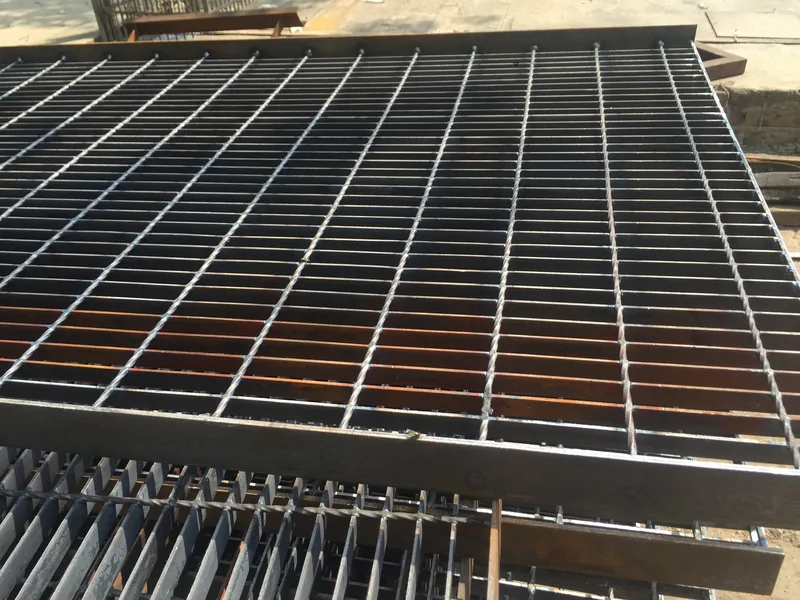
What do bearing bar size and pitch mean?
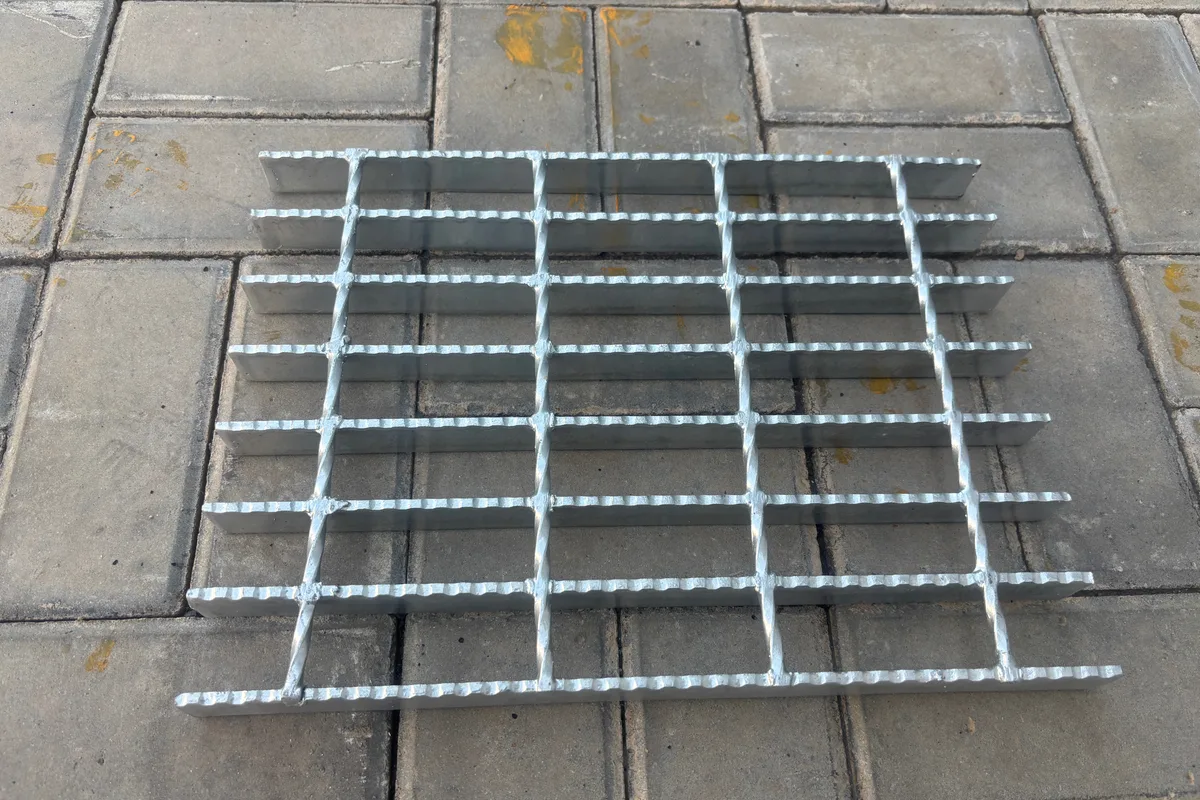
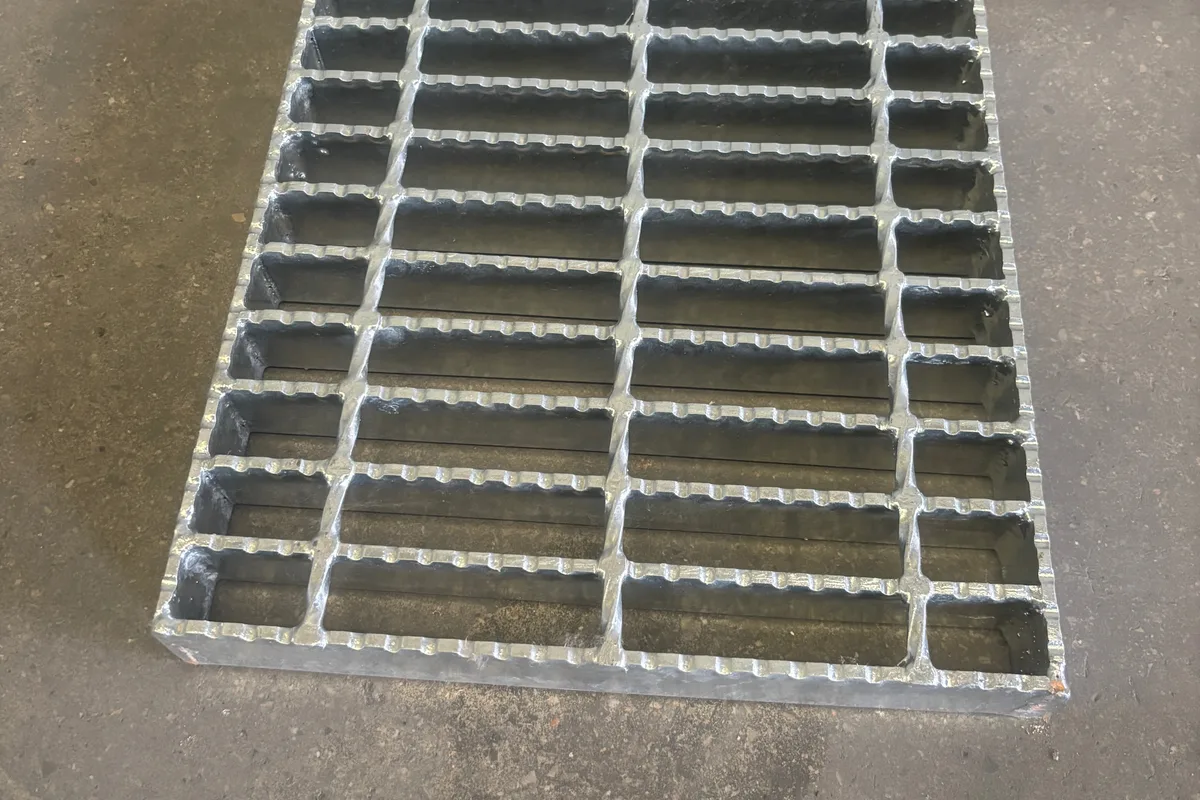
The bearing bar is the bar that carries the load. Its depth (height) and thickness set how much load the panel takes and how much it deflects. The pitch is the centre-to-centre spacing of the bearing bars, which sets the opening size between them.
How bar size affects performance
- Deeper bars carry more load and span further for the same deflection.
- Thicker bars add capacity and stiffness, especially for heavy traffic.
- A larger bar size also weighs more and costs more, so match it to the need.
How pitch affects opening and load
- 30 mm pitch: common general-purpose opening; good balance of load and drainage.
- 40 mm pitch: larger openings for faster drainage of solids and debris.
- 60 mm pitch: widest openings for coarse material passage.
- 15 mm / 20 mm pitch: fine mesh for small-particle retention and ball-proof requirements.
Selection steps
- Define the clear span between supports.
- Define the load: pedestrian, equipment, forklift or vehicle, including wheel or point loads.
- Pick the opening size needed for drainage or debris passage.
- Choose bar depth and thickness to meet the load and span with acceptable deflection.
- Choose pitch to meet the opening requirement without over-reducing capacity.
- Confirm the surface (plain or serrated) for the slip condition.
Common combinations
| Use | Bar size | Pitch |
|---|---|---|
| Light walkway | 25×3 mm | 30 mm |
| General platform | 30×3 mm or 32×5 mm | 30 mm |
| Heavy equipment | 40×5 mm to 60×5 mm | 30–40 mm |
| Coarse drainage | 30×3 mm | 40–60 mm |
Final capacity must be checked against the actual span, load and support condition, not selected from this table alone.
Bearing Bar Size & Spacing FAQ
Does a bigger pitch mean weaker grating?
A wider pitch reduces the number of load paths, so capacity generally drops for the same bar size; compensate with a larger bar.
Which pitch drains best?
Wider pitch (40–60 mm) passes solids and water faster; finer pitch retains small particles.
Should I decide bar size before pitch?
Set the load and span first (bar size), then choose pitch for the opening requirement.