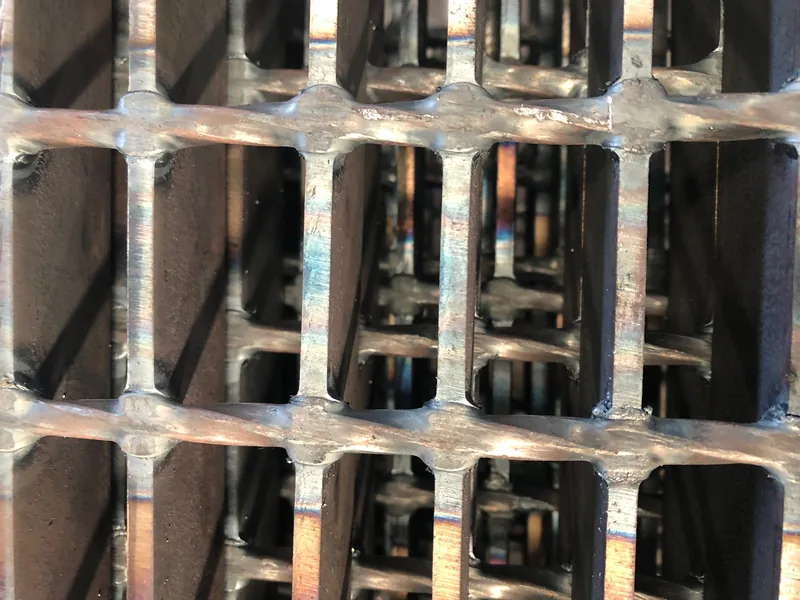
What capacity actually depends on
A panel fails or deflects based on four things working together. Change any one and the capacity changes, which is why a bar size quoted without a span is meaningless.
The governing inputs
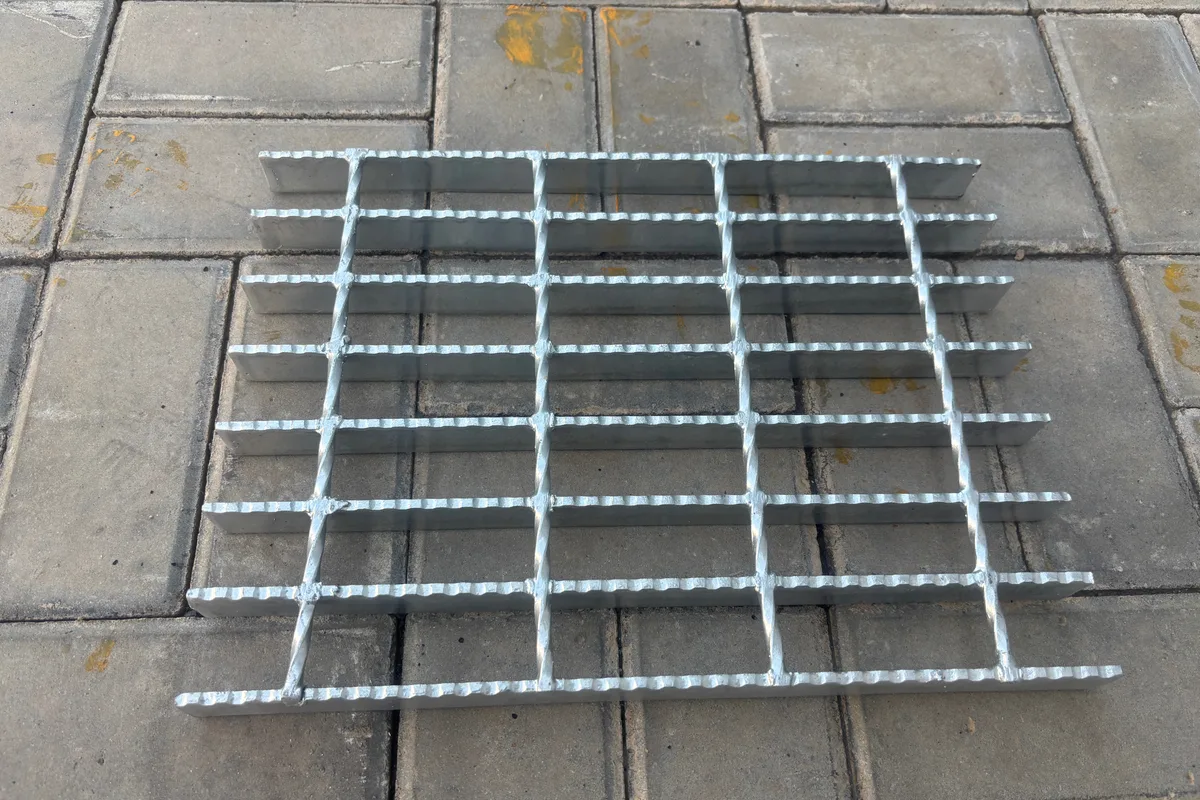
- Bearing bar size: depth and thickness set the strength of each bar.
- Bearing bar pitch: how many bars share the load across the width.
- Clear span: the unsupported distance the bars cross.
- Support condition: whether the panel is simply supported, bolted down or continuous.
- Load type: distributed, or concentrated from a wheel or machine foot.
The concept behind the calculation
- Each bearing bar acts as a small beam spanning between supports.
- The panel capacity is the combined effect of those bars.
- Strength checks whether it will fail; deflection checks whether it will feel springy.
- A panel can be strong enough but still fail a deflection limit.
What to prepare before asking
- Clear span between supports, measured in the bearing direction.
- The load: its size, and whether it is spread or concentrated.
- The traffic: pedestrian, trolley, forklift or truck.
- Whether panels are clipped, bolted or welded down.
- Any deflection limit the project specifies.
Why not to rely on a rough estimate
- Wheel loads concentrate into a small area and change the answer sharply.
- Cut-outs and holes remove load path and are easy to overlook.
- Support that is not continuous reduces effective capacity.
- Have the final selection checked against the actual conditions before ordering.
Load Capacity FAQ
Can you give capacity from bar size alone?
No. Span, support and load type are needed as well.
Does deflection matter?
Yes. A panel can carry the load but still be too springy to use comfortably.
Do cut-outs reduce capacity?
Yes. Any hole removes load path and should be checked.