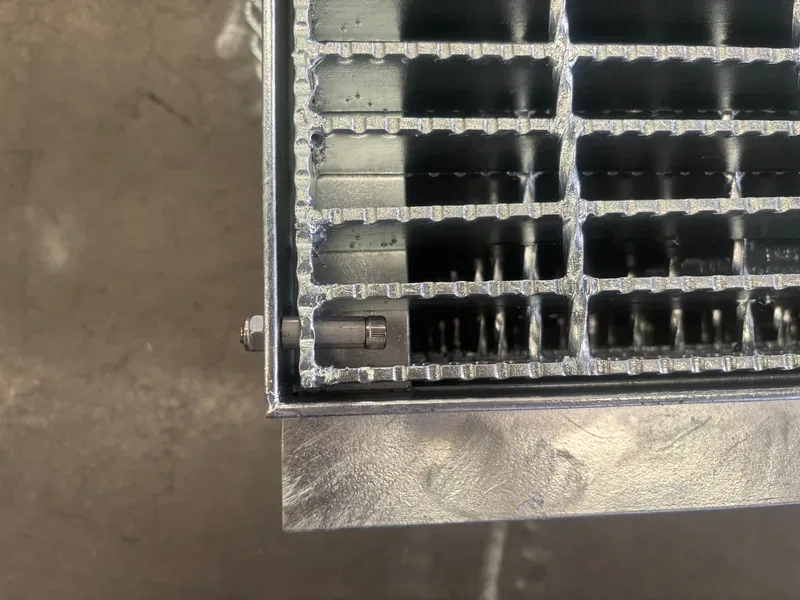
What is pedestrian trench grating?
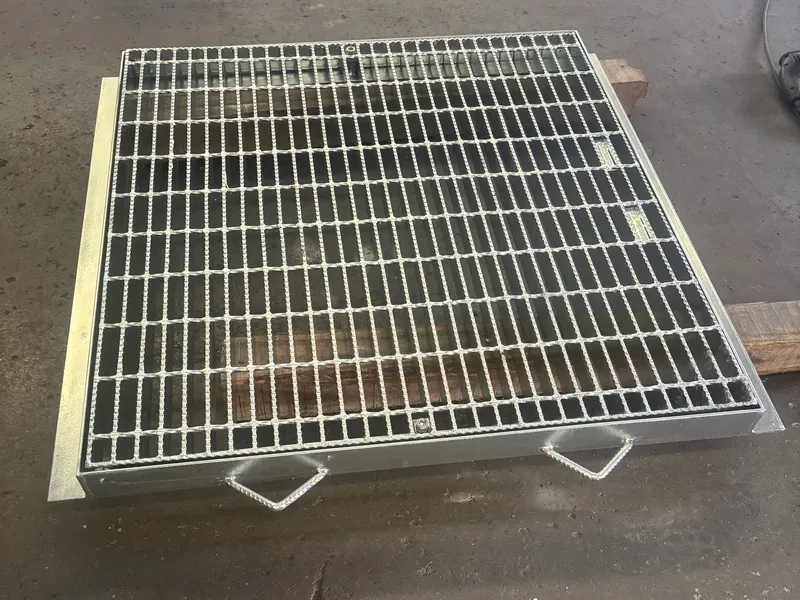
Pedestrian trench grating is trench or channel grating specified for areas used by people on foot: plazas, shopping streets, station concourses, park paths and building forecourts. The load case is light, but the comfort and safety requirements are higher than for plant areas.
Opening size and heel-proof detailing
- Narrow openings stop shoe heels from catching or passing through.
- Small spacing also protects walking aids, canes and pushchair wheels.
- Fine pitch or close-mesh grating is used where heel-proof performance is required.
- Balance this against drainage: smaller openings pass less water.
Slip resistance
- Public areas are expected to stay walkable when wet—consider serrated bearing bars.
- Serrated tops give grip without needing a coating that wears off.
- Consider the slope and how water drains across the surface.
- For dry internal concourses, plain grating may be acceptable.
Level and ride quality
- The grate should finish flush with the paving to avoid a trip edge.
- Firm seating stops rocking and noise under footfall.
- Alignment along the run matters: small steps between panels are felt by pedestrians.
- Where the run crosses a cycle route, check the opening suits narrow wheels too.
Applications
- Public plazas, forecourts and shopping streets
- Station concourses and transport interchanges
- Park paths and landscape drainage
- Building entrances and courtyards
Usage cautions
Ordering information
- Opening width, length and support detail
- Opening-size or heel-proof requirement
- Surface type and slip requirement
- Finished level and paving interface
- Material, finish and quantity
Pedestrian Trench Grating FAQ
What does heel-proof mean?
An opening small enough that a shoe heel cannot catch or pass through; usually achieved with fine pitch or close-mesh grating.
Does a smaller opening reduce drainage?
Yes. Finer openings pass less water, so size the run for the flow as well as for foot safety.
Should public areas use serrated grating?
Usually yes, since these areas must remain walkable when wet.