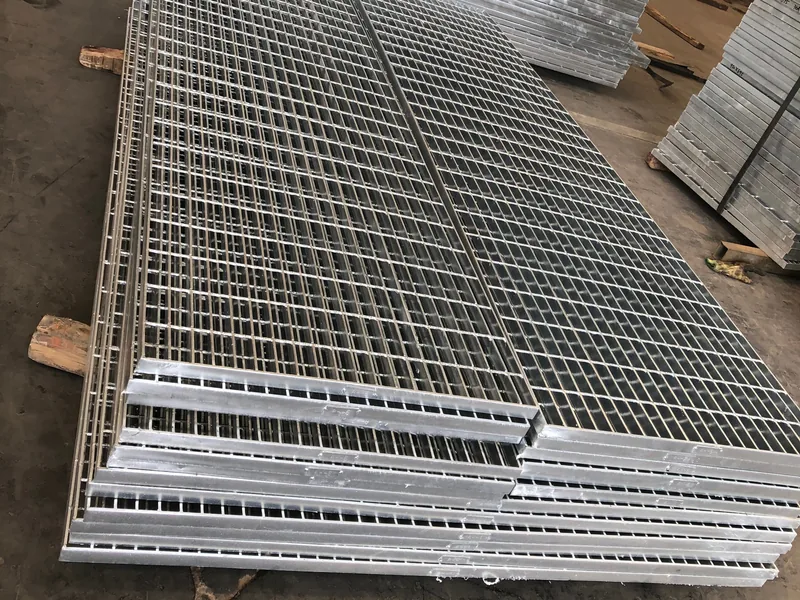
What is hinged trench grating?
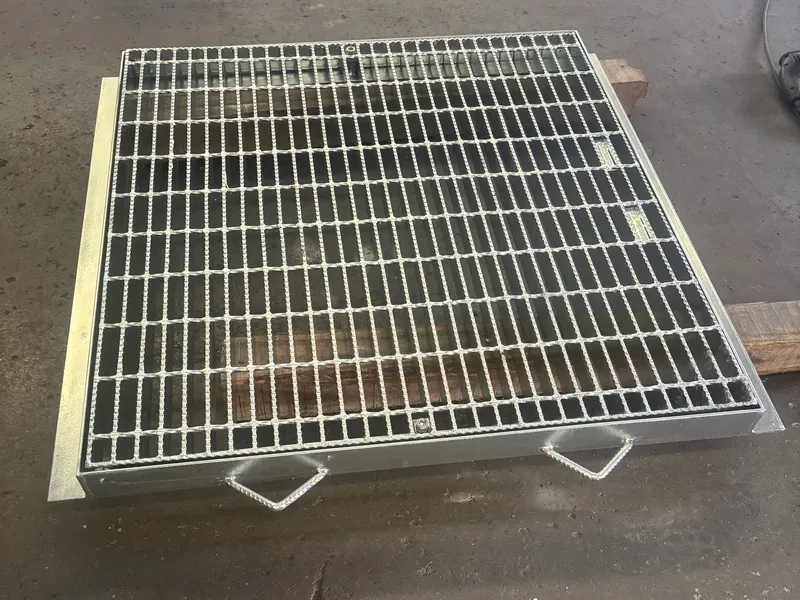
Hinged trench grating—also called a hinged trench cover or hinged drain cover—is a grating panel joined to its frame by a hinge assembly. When opened for inspection or cleaning, the cover stays attached to the frame rather than being lifted off completely.
This keeps the cover from being dropped, misplaced or left as a trip hazard, which is why it is used wherever the trench is opened often.
Structure and how it works
- Hinge assembly (pins, brackets or a continuous piano hinge) links the cover to the frame and sets the open angle.
- Cover panel is grating or a solid plate matched to the opening and load class.
- Frame anchors to the surrounding slab, channel or trench wall.
- Stays or limit chains hold the cover at the intended open angle.
Manufacturing and fitting process
Frame installation
The frame is set to the correct level in the slab or channel.
Cover fabrication
The cover is built with hinge lugs or a continuous hinge edge.
Hinge fitting
Pins or brackets join the cover to the frame and set the swing.
Surface treatment
The assembly is hot-dip galvanized after fabrication.
Function test
The cover is opened and closed to confirm the angle and stay.
Marking and packing
Load class and hinge details are marked before dispatch.
Common options
| Option | Common choices | What to consider |
|---|---|---|
| Hinge type | Continuous piano, butt or strap hinge | Open angle and how often it is used |
| Cover | Grating or solid plate | Drainage vs debris and smell control |
| Load class | Pedestrian to heavy vehicle | Traffic above the trench |
| Open angle | 90° to 110° | Clearance and stay support |
| Lock | Optional lockable version | Security of the location |
Surface and finish
Hinged covers are hot-dip galvanized after fabrication so the cut edges, welds and hinge area are coated. Stainless steel is used in aggressive or hygienic environments.
Applications
- Cable trenches and electrical or utility corridors
- Plant rooms and equipment basements opened for inspection
- Food, dairy and pharmaceutical areas with frequent washdown
- Laboratories and cleanrooms with service trenches
Hinged vs removable vs fixed
| Feature | Hinged | Removable | Fixed |
|---|---|---|---|
| Access | Stays attached when open | Lifted off completely | No planned access |
| Safety | No dropped or lost covers | Risk of misplacement | Permanent |
| Best for | Frequent access | Occasional, wide openings | Never opened |
Usage and maintenance cautions
- Inspect hinge pins for wear and corrosion; replace them before they fail.
- Lubricate the hinge if specified; do not let coating weld the joint shut.
- Confirm the open angle does not block the walkway or a doorway.
- The load rating applies to the cover, not the hinge—do not exceed it at the pivot.
Ordering information
- Opening width, length and clear span
- Required load class and traffic type
- Hinge type, open angle and stay requirement
- Cover type (grating or plate) and finish
- Optional lock and keying
- Quantity and delivery destination
Hinged Trench Grating FAQ
Can a hinged cover also be locked?
Yes. A lock can be added for public or unattended locations; see lockable trench grating.
What maintenance does the hinge need?
Periodic inspection of the pins and lubrication where specified; replace worn pins before failure.
What open angle is typical?
Usually 90° to 110°, set by the stay or limit chain.